
From the MX500 and its heavy-ass wireless sibling to the MX518, G5, and beyond—the shape that kept finding its way back onto our desks.
Let’s go back to a time when a mouse having a wire was barely worth mentioning.
Your computer had cables. Your keyboard had a cable. Your mouse had a cable, and occasionally that cable would catch on something at precisely the worst possible moment.
Wireless mice existed, of course. But convincing a competitive player to trust one was another conversation entirely.
Into this world came a family of Logitech mice with a rather distinctive silhouette: a rounded back, a deeply sculpted thumb area, and buttons built into that familiar sweeping shell.
Looking at one now, it’s easy to recognize an old mouse.
What’s more interesting is how many generations of hardware would eventually live inside some version of that idea.
Let’s start at the beginning.
2002: The MX500 establishes the family resemblance
Logitech’s original MX lineup arrived in 2002, with the MX300, MX500, and MX700 appearing in contemporary launch coverage. European reporting dates the rollout to late summer; September coverage documents the wider launch. [1]
For this story, the MX500 is where that familiar sculpted body takes center stage.
Silver and black. A generous palm area. A place for your thumb to settle. Side buttons positioned where a right-handed user could actually reach them.
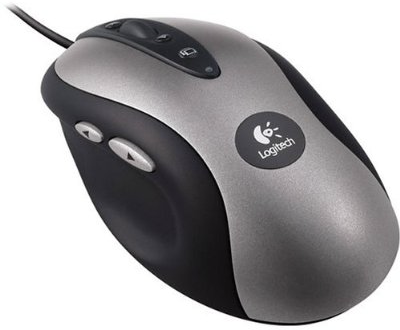 Image source: Rarst.net
It looks almost restrained now. Back then, it looked like someone had spent considerable time thinking about what a hand might want to hold.
There was personality in the shape before the more adventurous paint jobs arrived. You can put an MX500 beside its descendants and see the family resemblance immediately.
Think of an older BMW or Mercedes: the headlights change, the equipment improves, but something about the proportions gives it away.
The Logitech family would get plenty of new equipment.
The proportions were harder to retire.
Also 2002: The MX700, with complimentary forearm training
And then there was the MX700.
The wireless sibling. The one with the charging cradle. The one that looked very pleased with itself sitting upright on your desk.
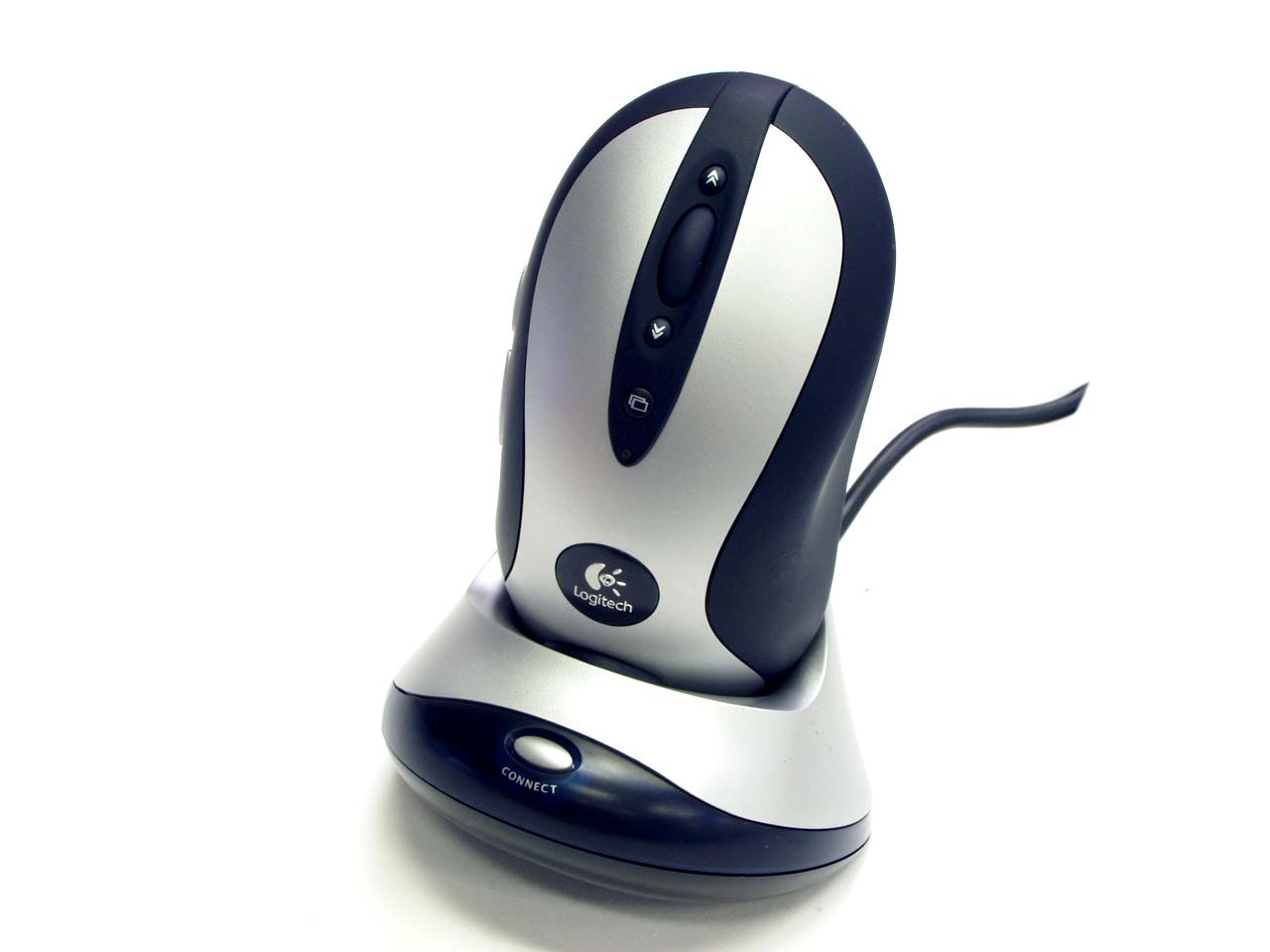 Image source: Newegg product archive
Logitech’s own datasheet lists 171 grams with batteries, compared with 115 grams without them. It included a pair of rechargeable NiMH batteries and a base that combined the receiver and charger. [2]
So yes, the heavy-ass wireless version is an entirely reasonable way to remember it.
That cradle also deserves some appreciation. Your mouse had a parking space. At the end of the day, you put it away like a tiny executive sedan.
The MX700 matters because wireless was already part of this family’s story at the beginning. The ambition was there: keep the comfortable shape, lose the cable, make the whole thing feel premium.
There was just a little more mouse to move around.
2004: The MX510 gets dressed for the occasion
By 2004, the MX510 had arrived, bringing the familiar body into its red-and-blue marbled era.
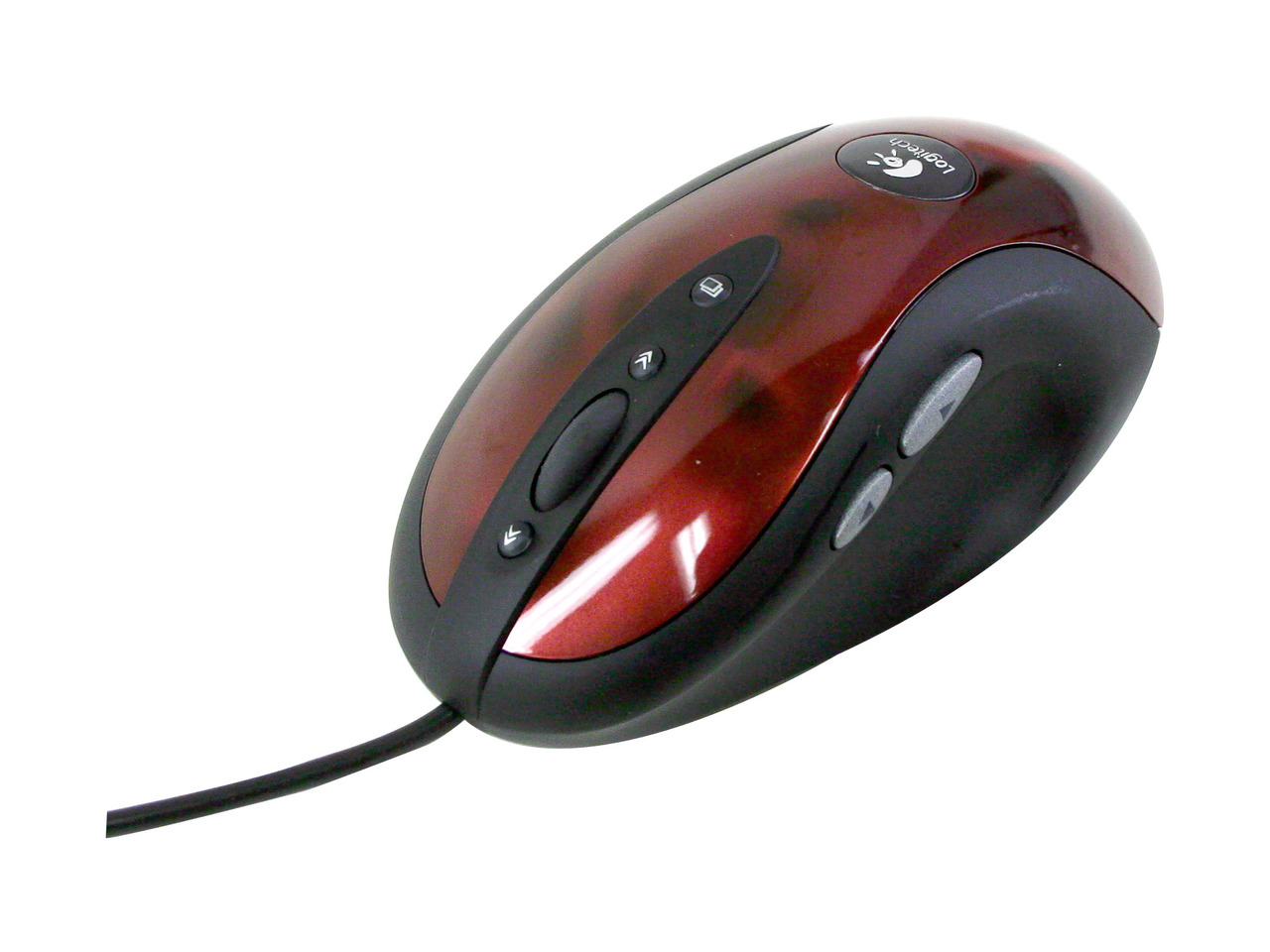 Image source: Newegg product archive
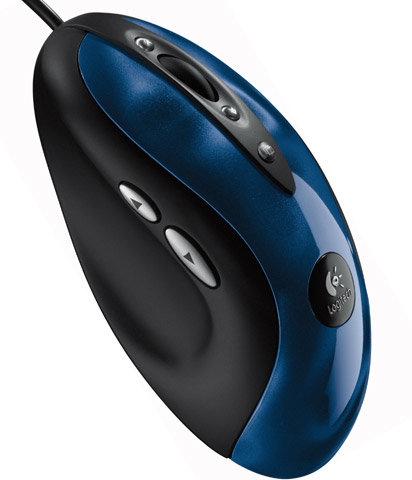 Image source: ComputerBase launch coverage
Those finishes still look fantastic. Slightly excessive? Sure. But there’s something charming about a peripheral expressing itself through the actual finish on its shell.
Contemporary hands-on coverage documents both colors and an 800 DPI optical sensor. Logitech’s European announcement, dated March 19, 2004, described an improved processing system while explicitly retaining the established MX shape; European availability was scheduled for April. [3]
This was more than a paint job, even though the paint job is probably what your brain retrieves first.
The MX510 is also worth treating as its own chapter. It tends to get introduced as “the one before the MX518,” which is a slightly unfair fate for such a recognizable mouse.
Some people remember the red one. Others remember the blue one.
Both groups are probably convinced they picked correctly.
2005: The MX518 arrives looking pre-dented
Logitech announced the MX518 at CeBIT on March 9, 2005, with European retail availability planned for April.
The original model raised maximum resolution to 1600 DPI and offered hardware sensitivity switching, including preset 400, 800, and 1600 DPI settings without additional software. [4]
The MX510’s colorful finish gave way to the MX518’s signature metallic, apparently dented surface.
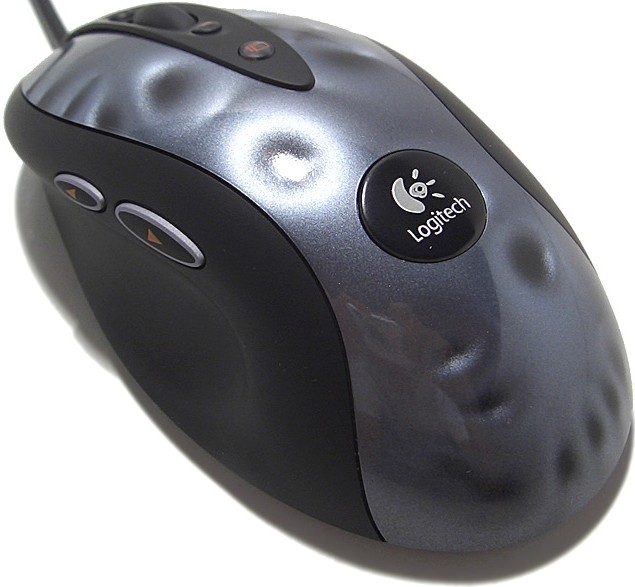 Image source: VideoTesty product archive
Apparently is doing some work there. Those dents were a visual effect. A contemporary reviewer even described a friend mistaking them for actual damage. [5]
Logitech had effectively supplied the battle scars before you’d played your first match.
The technical changes gave the MX518 more flexibility, but the familiar fit remained central to its appeal. Your hand didn’t need to learn an entirely new object just because the electronics had moved forward.
And while 1600 DPI looked impressive on the box, the useful story is the added choice and control. Doubling the number didn’t automatically double anyone’s ability to land a headshot.
If only it were that straightforward.
One detail for anyone comparing old specifications: later MX518 versions reached 1800 DPI. Logitech’s subsequent G400 announcement explicitly references that version, so both figures appear legitimately in the family’s history. [6]
2005: The family helps launch the G-series
Here’s where this becomes bigger than a couple of beloved mice.
In its May 20, 2005 announcement about the planned G-series, Logitech explicitly described building from the recently introduced MX518.
That gives the connection real substance. The MX518 was part of the foundation Logitech itself identified for its dedicated gaming lineup. [7]
Then, on August 11, 2005, Logitech unveiled the G5 and G7.
Both brought 2000 DPI laser tracking. The wired G5 offered adjustable weights, while the wireless G7 used interchangeable rechargeable battery packs. [8]
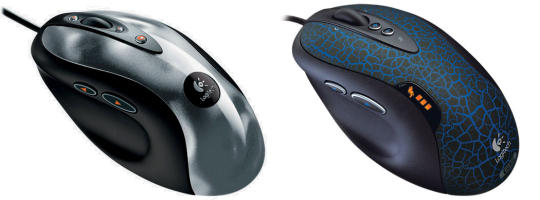 Image source: Rarst.net
Adjustable weights deserve a moment.
We had a mouse with a little tray into which you could deliberately insert additional mass. You were tuning the handling. Somewhere between configuring a peripheral and setting up a touring car.
The G7, meanwhile, continued the wireless argument with a more gaming-focused approach.
This is where the family tree branches. The optical MX518 continued to have its own future while the G models explored different combinations of sensors, features, and customization.
2007–2009: A thumb button returns, and the G500 takes over
The original G5 shipped with only one thumb button.
The 2007 revision, recognizable by its blue-and-black cracked finish, brought the second one back. That’s the version pictured here—and a useful reminder that even a familiar product name can hide meaningful changes. [9]
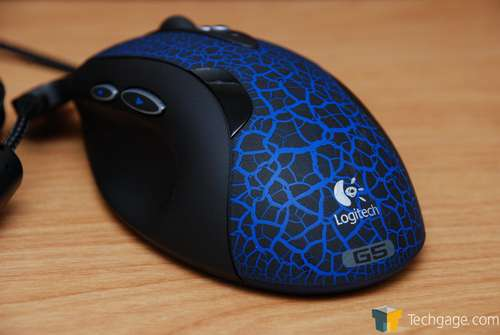 Image source: Rob Williams / Techgage; supplied reference image
Two thumb buttons. Then one. Then two again.
Progress occasionally takes the scenic route.
The G500, announced August 6, 2009, followed as Logitech’s explicitly named G5 successor, with U.S. and European availability planned for September.
It retained weight adjustment and added features including onboard memory and a dual-mode scroll wheel. Logitech also described changes to the shape, including a broader thumb rest and revised pinkie ledge. [10]
The resemblance remained, but this wasn’t an identical shell receiving new badges indefinitely.
There were actual revisions to the bodywork.
2011–2013: The optical faithful get the G400 and G400s
For the more direct continuation of the MX518, look to the G400, announced June 9, 2011.
Logitech’s announcement was unusually clear about the intention: retain the shape and button arrangement people liked, then improve the underlying hardware.
The changes included a 3600 DPI optical sensor, 1000 Hz reporting, and a lighter cable. [6]
That is a pretty appealing product brief for anyone already comfortable with their mouse.
Please improve it. Please remember that my hand likes this one.
The G400s followed in the lineup announced March 20, 2013, with U.S. availability planned for April and Europe for May. It brought 4000 DPI optical tracking and revised surface treatments.
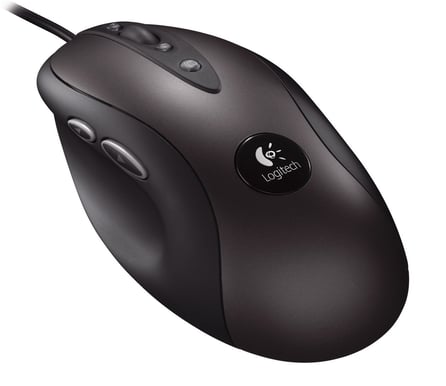 Image source: Inet product archive
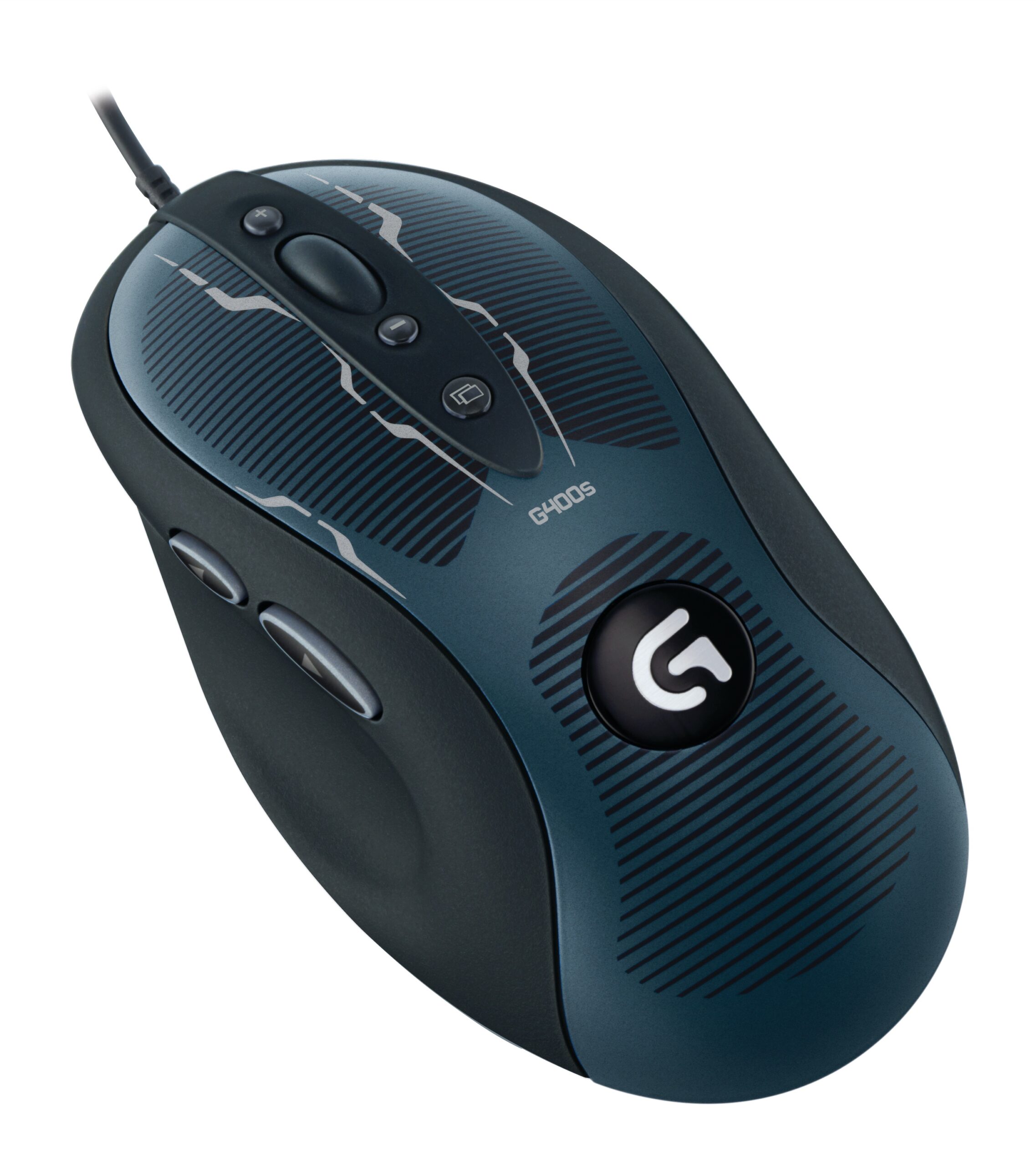 Image source: Tweakers product archive
The G500s appeared in that same announcement, continuing the laser-equipped side of the family. Logitech explicitly connected the G400s to both the MX518 and G400. [11]
By this point, the basic design story had stretched across more than a decade.
The original MX500 was looking less like an old product and more like a very productive starting point.
A brief interruption from the port-side team
Right. All very lovely.
Where is the support for lefties?
That deep thumb groove and sculpted body were wonderfully accommodating if you used the intended hand.
For someone actually mousing with their left hand, the accommodation was considerably less generous.
“Ergonomic” always deserves the follow-up question: ergonomic for whom?
The classic sculpted MX family was overwhelmingly a right-handed affair. That belongs in its history alongside the praise.
There is progress later in Logitech’s gaming lineup. The PRO Wireless, announced August 21, 2018, included removable buttons on both sides, allowing a genuinely ambidextrous configuration. [12]
The PRO 2 LIGHTSPEED, announced September 17, 2024, continued that approach, with a symmetrical shape and customizable magnetic side buttons. [13]
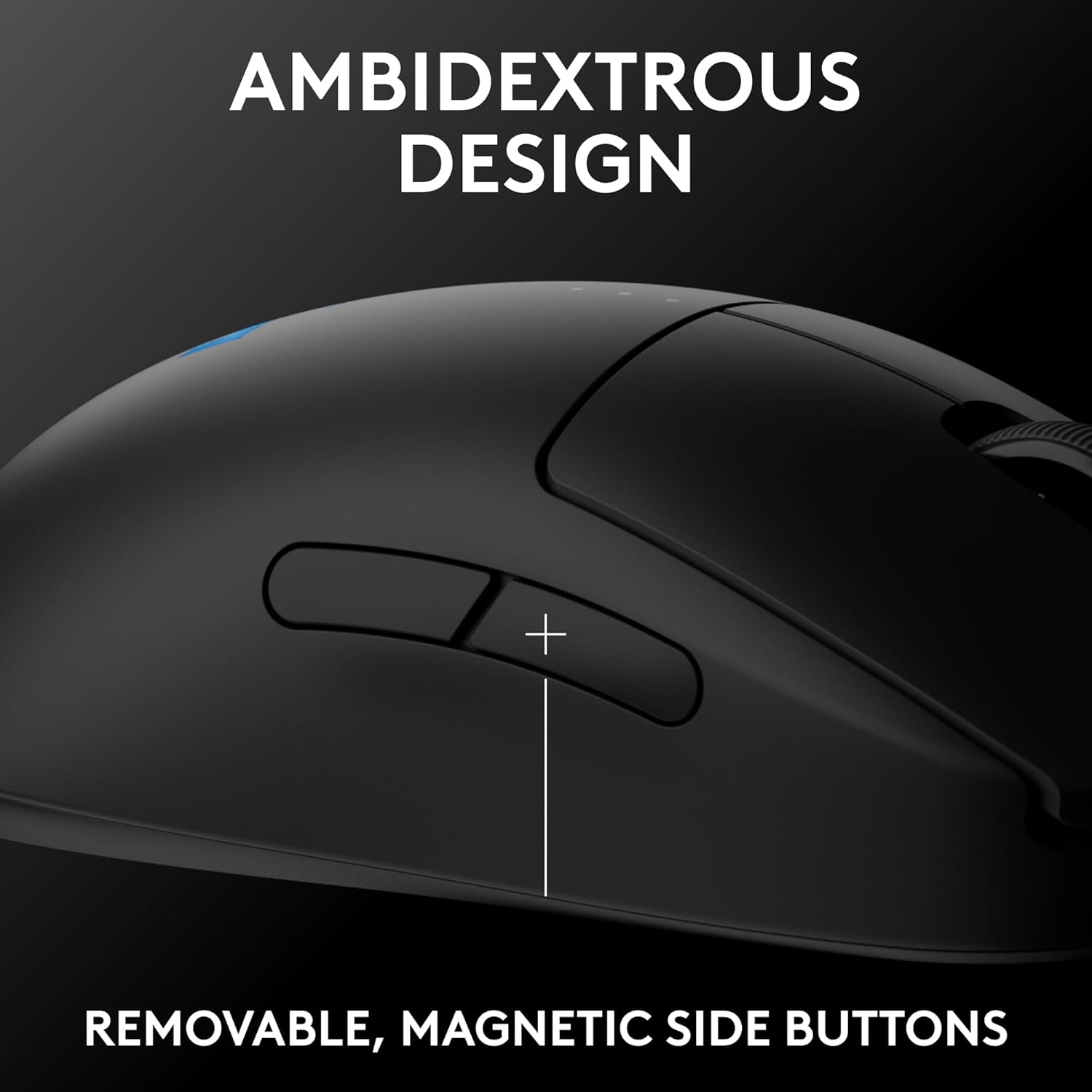 Image source: Logitech promotional artwork via Mustafa Computers
The port-side team finally gets something more substantial than “you could probably hold it.”
But the distinction matters: a symmetrical-looking body doesn’t, by itself, give a left-handed player equivalent access to the thumb controls. Check the buttons, too.
And these PRO mice represent a later chapter in Logitech’s gaming development. They aren’t the old MX500 shell with the thumb groove sanded off.
2019: The MX518 comes back
Following an earlier Chinese release, the modern MX518 revival received its international announcement on February 19, 2019.
The familiar form returned with updated internals, including a HERO 16K sensor, onboard memory, and a new Nightfall finish. [14]
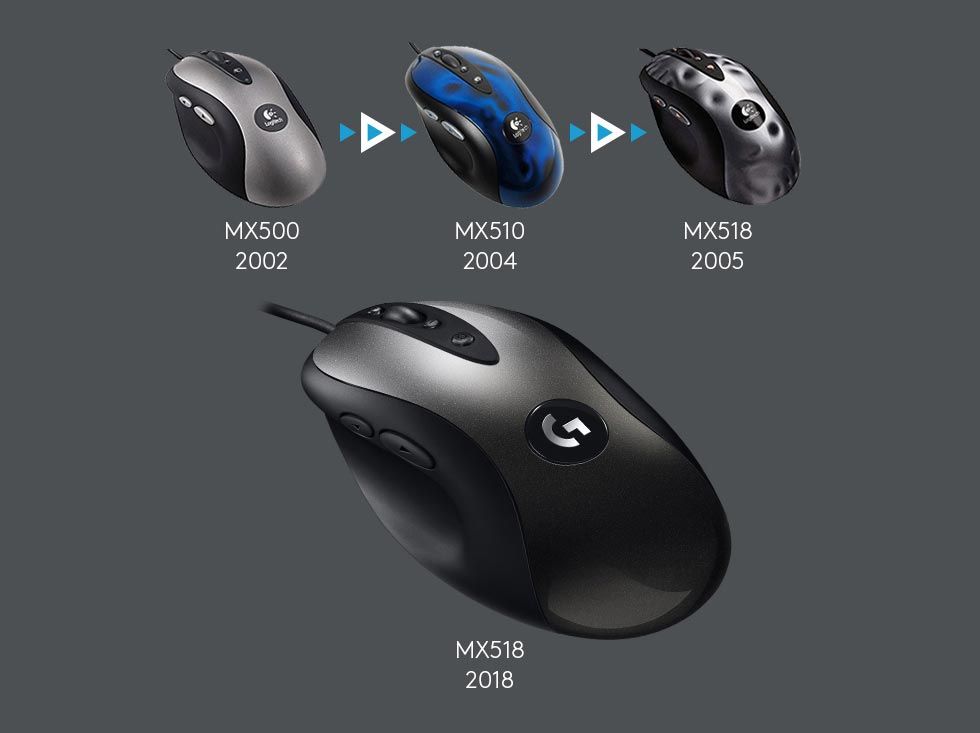 Image source: Feber
There’s something rather satisfying about this.
After years of successors and alternative designs, Logitech came back to the actual MX518 name and recognizable shape.
The car analogy practically writes itself: familiar body, modern engine.
It also gives us a sensible way to talk about longevity. The original design didn’t need to remain technically competitive forever for the shape to remain worth using.
Those are different things.
A sensor can age out of contention while the hand wrapped around it continues to ask a perfectly reasonable question:
Can I have this shape again?
So, was it actually bulletproof?
Some owners certainly make a convincing case.
There are firsthand reports of MX510s reaching twenty years of ownership, and MX518 owners reporting continued use of units bought in 2005. Those are individual experiences, rather than a controlled reliability study, but they help explain the reputation. [15]
Of course, a surviving mouse doesn’t tell us how many others failed along the way. “Bulletproof” is affectionate shorthand.
Still, there are two kinds of endurance here: the hardware that keeps working, and the design people keep wanting.
The MX family managed to build a following around both.
From the MX500 and its battery-laden sibling, through the colorful MX510, the apparently battered MX518, and the branching G-series, you can follow a remarkably persistent idea about how a mouse should sit in a hand.
More than twenty years after the beginning, that is a pretty good legacy for a plastic clamshell.
And if there’s still an MX700 on your desk, fair play.
Your forearm has earned its retirement.
For another early esports classic, read our Microsoft IntelliMouse Explorer 3.0 history. Pair the hardware story with our guide to mouse surfaces.
References
- 2002 MX launch coverage
- Logitech MX700 original datasheet
- Logitech MX510 announcement, March 19, 2004 (reproduced press release)
- Logitech MX518 announcement, March 9, 2005 (reproduced press release)
- Techgage MX518 contemporary review
- Logitech G400 announcement, June 9, 2011 (reproduced press release)
- Logitech G-series plans, May 20, 2005 (reproduced press release)
- G5 and G7 announcement, August 11, 2005
- Techgage revised G5 review, April 30, 2007
- Logitech G500 announcement, August 6, 2009
- Logitech G400s and G500s announcement, March 20, 2013
- Logitech PRO Wireless announcement, August 21, 2018
- Logitech PRO 2 LIGHTSPEED announcement, September 17, 2024
- GamesBeat MX518 revival coverage, February 19, 2019
- MX510 owner report of twenty years of ownership
Additional sources: European 2002 rollout; MX510 red and blue hands-on review; Earlier Chinese MX518 revival; MX518 owner report.