
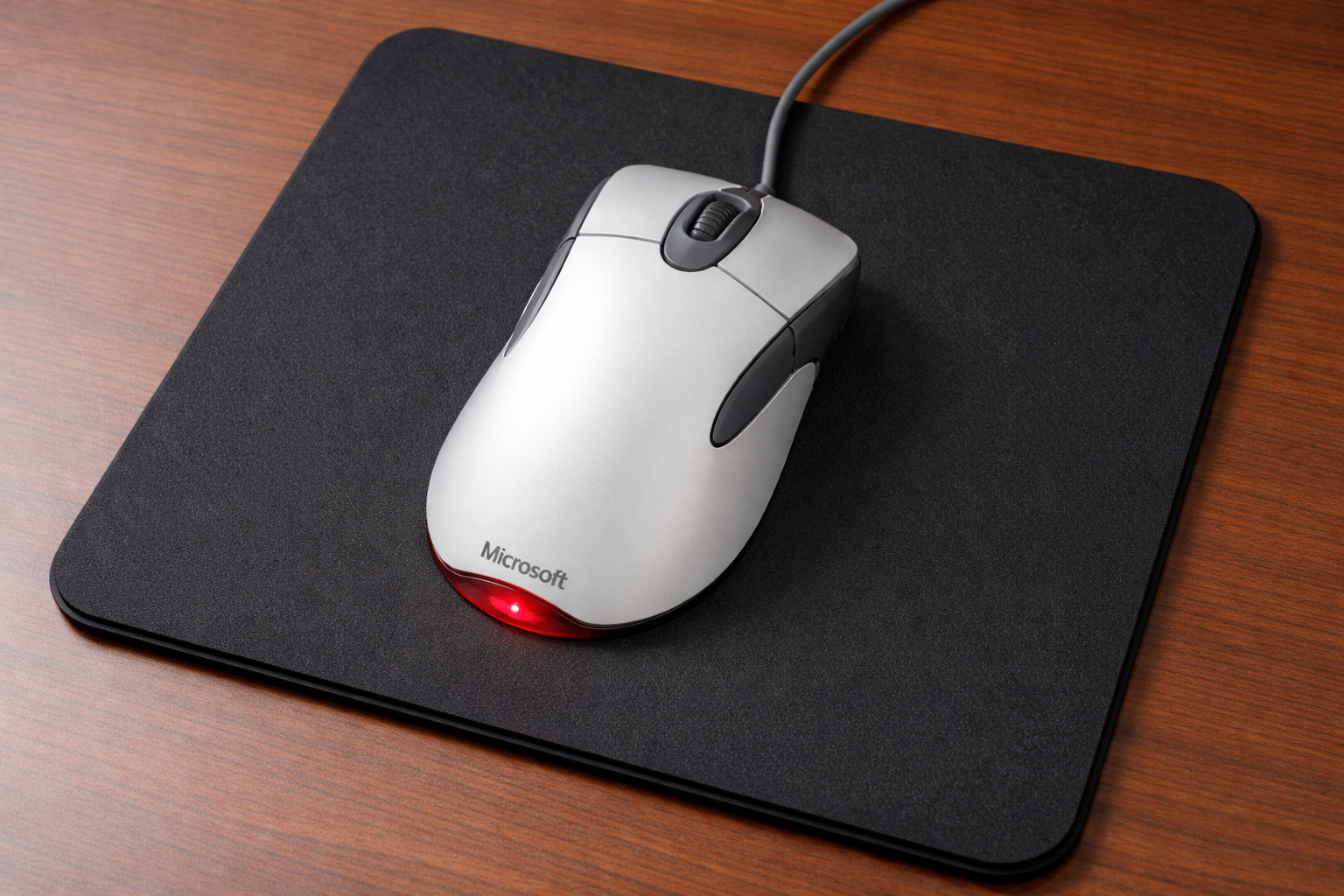
Why one of the oldest gaming mice still has a cult following
Every era of PC gaming has its defining hardware. Mechanical keyboards have their classics, GPUs have their legends, and in the world of competitive mice there’s one name that continues to surface decades later:
The Microsoft IntelliMouse Explorer 3.0.
Released in the early 2000s, the IntelliMouse Explorer 3.0—often shortened to IE3.0—became one of the most influential gaming mice ever made. Long before the era of lightweight esports mice, 8K polling rates, or 30,000 DPI sensors, it earned a following among players who valued a familiar shape and predictable tracking. Microsoft’s 2006 reintroduction explicitly responded to demand from low-sensitivity FPS players. [3]
Even today, it maintains a surprisingly strong cult nostalgia following among esports veterans and hardware enthusiasts.
The Mouse That Defined Early Esports
The chronology deserves a little care. Microsoft’s 2018 retrospective dates the celebrated Explorer 3.0 design to 2003, while its contemporary September 2001 announcement already documents a redesigned wired Explorer with finger grooves and a new optical system. Those sources describe different milestones, so “early 2000s” is the safer shorthand for the family’s beginnings. [1] [2]
But competitive players quickly adopted it.
Microsoft’s 2001 announcement emphasized faster optical image capture and improved tracking during quick movements. Its later design retrospective credits the 3.0’s low-DPI sensor and button feel as part of its appeal. These are Microsoft’s accounts of the hardware, rather than proof that it outperformed every competing mouse. [1] [2]
For games like Counter-Strike, where pixel-precise aiming was everything, that reliability mattered more than flashy features.
The result was a following strong enough to bring the design back.
By 2006, Microsoft was openly pitching the returning Explorer 3.0 to FPS players. [3]
Some of the reasons it became so popular included:
- A large, ergonomic right-hand shape
- Reliable optical tracking with minimal issues
- Solid build quality
- Simple design without unnecessary features
- Comfortable grip for long tournament sessions
For many players, the mouse just felt right.
A Shape That Became a Blueprint
One of the most important aspects of the IntelliMouse Explorer 3.0 was its shape.
The large ergonomic curve fit naturally into a palm grip, allowing players to rest their hand comfortably during long sessions. The placement of the thumb buttons also became a reference point for many later gaming mice.
In Microsoft’s design retrospective, Devices Design Director Simon Dearsley described the 3.0’s influence on later gaming-mouse ergonomics. [1]
That is the manufacturer’s assessment, but the lasting demand for the familiar shape is easy to understand. The catch, as ever: this sculpted fit was intended for the right hand. Port-side team, we see you.
The Sensor: Simple but Reliable
By modern standards, the technical specs of the IntelliMouse Explorer 3.0 seem modest.
For a documented example, the 2006 reissue advertised 9,000 sensor images per second, improved mouse feet, and a detented scroll wheel. [3]
That image-capture figure is not USB polling rate or DPI. They describe different parts of the tracking system, and mixing them together makes old spec sheets sound much more magical than they were.
The useful question was how the mouse behaved in your hand. A comfortable shape and predictable response could matter more than the biggest number on the box.
The Disappearance (and the Nostalgia That Followed)
Eventually, newer gaming mice began to dominate the market.
Companies like Razer, Logitech, and SteelSeries started building mice specifically for esports audiences, with higher DPI sensors, improved polling rates, and more specialized designs.
The history even includes an earlier comeback: Microsoft announced the returning Explorer 3.0 in August 2006, with October availability and a $39.95 estimated U.S. price. [3]
But something interesting happened afterward.
Instead of fading away entirely, the mouse began to develop a nostalgia-driven cult following. Competitive players who had used it during the golden era of LAN tournaments continued to hunt for replacements when their old units finally wore out. In some instances, bringing modern sensors into the old chassis.
Online forums and esports communities regularly discussed the mouse years after production stopped.
The Surprise Return
In 2017, Microsoft revived the design with the Classic IntelliMouse. Its later Pro announcement confirms that date. [4]
This modern refresh preserved the familiar shape while changing the internals. The more explicitly gaming-focused Pro IntelliMouse followed on May 28, 2019, adding an upgraded tracking sensor, a braided cable, and customizable tail lighting. [4]
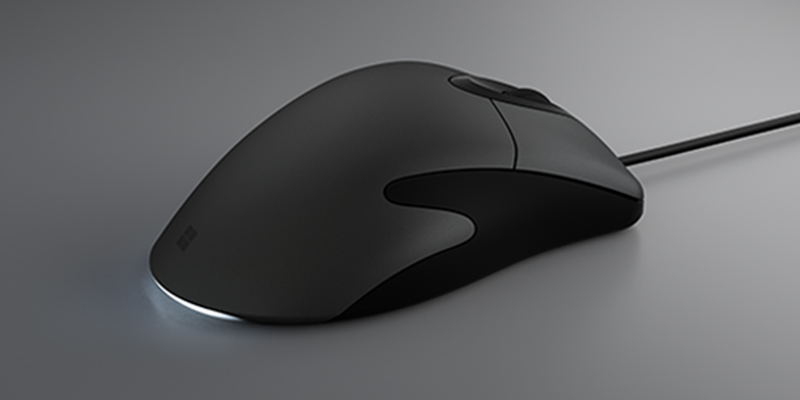
For longtime fans of the original IE3.0, the re-release felt like a tribute to one of gaming’s most beloved peripherals.
It also confirmed something many players had believed for years:
The IntelliMouse wasn’t just a relic—it was a design that still held up.
The Collector Market Today
Because of its historical significance, the original IntelliMouse Explorer 3.0 has become something of a collector’s item.
Depending on condition, original units often sell on secondary markets such as:
- eBay
- retro hardware marketplaces
- enthusiast gaming forums
There is no useful timeless price tag for a used mouse. Condition, revision, packaging, and seller expectations all matter. Compare recent completed sales for the same model rather than treating an ambitious asking price as market value.
For collectors, check the underside label, cable, scroll wheel, switches, and feet. Familiar bodywork does not guarantee familiar internals.
Why the IE3.0 Still Matters
The IntelliMouse Explorer 3.0 represents an important moment in gaming history.
It emerged at a time when competitive PC gaming was still forming its identity. Players were experimenting with equipment, discovering what worked, and slowly defining what esports gear should look like.
The IE3.0 succeeded not because of marketing hype or flashy specs—but because it performed reliably when it mattered most.
That reliability made it one of the defining peripherals of early esports.
And even today, when gaming mice have sensors capable of tens of thousands of DPI and ultra-lightweight designs, the legend of the IntelliMouse Explorer 3.0 still holds a special place in competitive gaming culture.
Sometimes the most influential hardware isn’t the most advanced.
It’s the gear that simply worked when players needed it.
For the other side of this early FPS rivalry, explore our Logitech MX family history. And don’t forget the other half of the aiming setup: the surface underneath it.